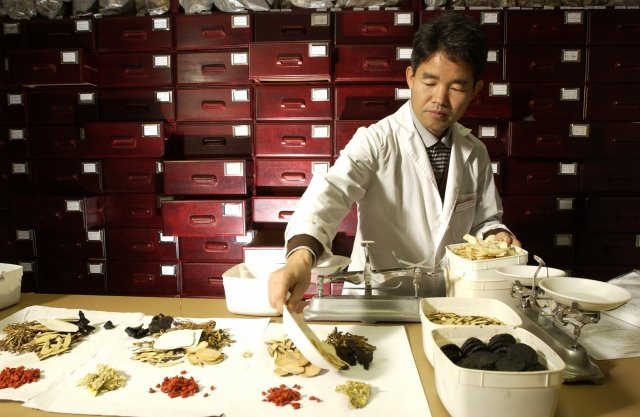
Those who are involved each day in the fight against poachers and traffickers of animal species threatened, whether NGOs such as Planet Tiger or Wildlife Angel, often incriminate traditional Chinese medicine as the cause of rhinos and tigers misfortune. Let’s try to really understand the Chinese medicine precepts on the use of animals. We will discuss some received ideas in order to have a clear understanding of the phenomenon.
It is China that exclusively uses products made from animals.
False. China is not the only one. Vietnam is also considerably involved in the importation of these illegal products, as well as Thailand and Burma to a lesser extent.
The elephant ivory has nothing to do with Chinese medicine.
True. Because of the deficit of ivory from Asia, it is naturally to Africa that turned all the countries requesting this “valuable material” used in the manufacture of objects, jewelry or valuable coatings. However, the Asian countries are not the only ones involved in this type of import, as well as for some precious wood matter. Gulf countries are also strongly interested in buying these products.
We talk a lot about rhinos and tigers. But these are not the only species concerned!
True. There are other animals such as some Asian antelopes, turtles and especially the African pangolin which are targeted by the traditional Chinese medicine. The scales that cover the entire body of the pangolin are highly sought by Asian people. Moreover, its flesh is very much appreciated by some “gourmets”.
Nothing can be done against ancient beliefs!
False. It is at the end of the sixteenth century that a Chinese doctor and naturalist, Li Shizhen, wrote an encyclopedic book in particular dedicated to therapeutic products and medicinal plants. He mentioned nearly two thousand therapeutic substances from plants, minerals and animal species. Even if at that time rhino horn and tiger bones are mentioned, it is more regarding their use as poison or hallucinogen.
Over the following centuries, the pillars of the Chinese medicine develop more widely around the acupuncture, traditional massage or Qi Gong, the pharmacopoeia being based mainly on herbal medicine. The use of products from animal species is not widespread. And with the arrival of European settlers, the traditional medicine suffered from a strong competition with the modern Western medicine, which slows down the use of certain traditional medicines.
It’s actually in the fifties that Mao Zedong has restored the traditional Chinese medicine reputation to counter the presence of modern medicine, symbol of Western imperialism, and thus facilitate his communist theories. Therefore it is more a fifty years culture than a millennium one, at least for the consumption of therapeutic products extracted from wild animals.
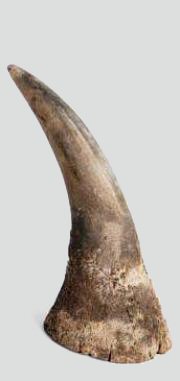
Rhino horn is used to treat a lack of libido!
False. This is a rumor spread by some Western media. Chinese traditionalist doctors know very well that this statement is false. The problem is that today, because the rumor was so widespread, many wealthy Asians have built this false power attributed to rhino horn and firmly believe it.
Rhino horn can cure cancer!
False. Again Chinese medicine is easy to blame. This is simply a marketing campaign launched by the Vietnamese mafia to make a large part of the population believe that it is actually a traditional miracle cure for a disease that frightens the world.
Far from me the idea, with this article, to clear the responsibility of the Asian market for rhino horn and tiger bones. My goal is simply to re-establish the truth on controversial beliefs.